

By Prachatai |
At least 26 conscripts were reported to have died under suspicious circumstances during military service over the past 17 years. Almost half of this number were reportedly subjected to beatings by commanding officers or senior conscripts. Some were said to have died following a sudden illness such as heatstroke and heart failure, while others reportedly committed suicide.

By Raviwan Rakthinkamnerd, Donlawat Sunsuk, and Spol Tanpraphan |
42 Thai soldiers died during the two waves of border conflict in June and December 2025. The dead were all non-commissioned officers, the highest rank among them being staff sergeant. Their families were paid twelve million baht in compensation. If sovereignty is “priceless", why is the compensation assigned to those who die in its defence so low?

By Sorawut Wongsaranon |
As the border conflict with Cambodia fuelled a surge of nationalism, the military was cast as a national hero. Yet calls for reform persists. The prolonged tensions have laid bare weaknesses in combat readiness linked to inefficient procurement and the need for reform of the budget procedure, which is the focus of the last instalment of the series. This raise the question whether blind increases in weapons procurement budgets are truly cost-effective.

By Sorawut Wongsaranon |
Even as a border conflict with Cambodia has fuelled an unprecedented surge of nationalism, restoring the military’s public reverence ahead of the 2026 election, Thailand continues to face mounting long-term pressure to modernise its armed forces. Efforts to downsize the military are already under way, with even some senior officers acknowledging the need for reform despite persistent internal resistance. Calls to reform the military recruitment system have likewise not disappeared, as the structural causes driving discontent remain unresolved.

By Sorawut Wongsaranon |
Military reform was a central issue in Thailand's 2023 general election, with the People's Party emerging at the most prominent advocate of change. In 2026, however, the border conflict between Thailand and Cambodia has fueled an unprecedented surge of nationalism, raising questions whether reform remains possible. This first instalment of three-part series on the military reform examines one foundational question: can the Thai military realistically be downsized?
By Prachatai |
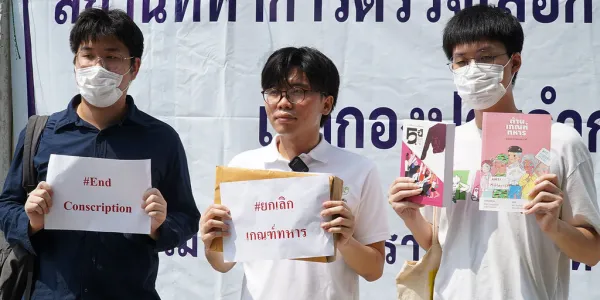
In an act of civil disobedience, student activist and conscientious objector Netiwit Chotiphatphaisal went to a military conscription centre in Samut Prakan’s Bang Pu District and announced that he will not participate in the conscription process.

By Prachatai |
A former assistant of Move Forward Party (MFP) MP Tisana Choonhavan has been found dead while serving as a military conscript ahead of being discharged.

By Prachatai |
<p>Protesters on Sunday (29 November) marched to the 11th Infantry Regiment headquarters to raise questions about the transfer of army units to the direct command of the crown.</p>
By Prachatai |
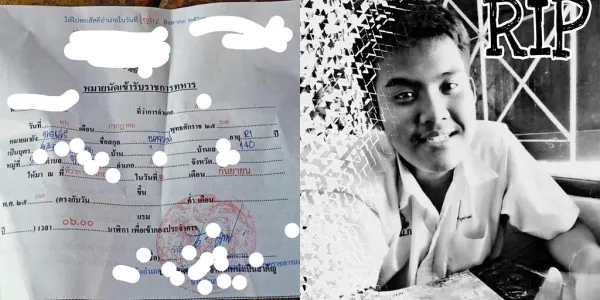
<p>A conscript Seri Butwong died after serving for only 15 days. The hashtag #Abolish conscription hit the twitter top trend as opposition MPs questioned the Armed Forces over their failures in taking care of personnel.</p>
By Prachatai |
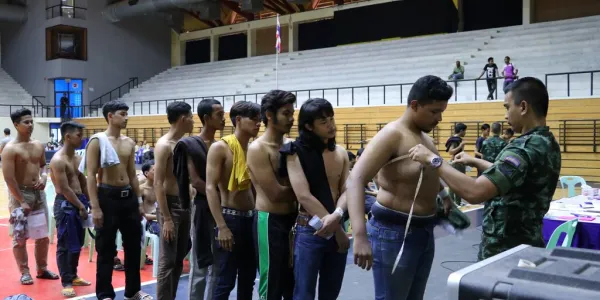
<p>The Thai parliament has opened an online public hearing on a new Military Service Act which abolishes conscription, standardizes welfare and training and penalizes officers who exploit subordinates.</p>
By Prachatai |
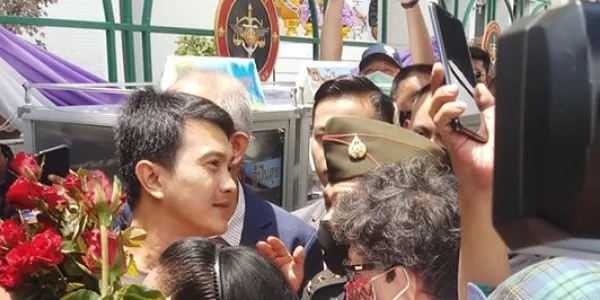
<p>A military court has granted 50,000 baht bail for a former army sergeant who publicly exposed corruption within his division and suffered retaliation.</p>

By Yiamyut Sutthichaya |
<p>An Army sergeant has spoken out after finding himself involved in military corruption and has received a questionable lengthy punishment for his pains. Military reform, civilian control and systematic external monitoring are needed to shed light on an uncomfortable truth within the Thai military.</p>