

By Zoe Chiang |
Nearly fifty years on, the 6 October 1976 Thammasat University Massacre is no longer a denied chapter of history. Commemoration events have expended since the 2020 youth movement, but even as the silence is broken, accountability remains to be found.

By Prachatai |
The Criminal Court has dismissed a petition requesting an inquiry to end inhumane treatment of human rights lawyer Anon Nampa regarding the use of leg shackles during his royal defamation trial, citing that the practice was lawful.

By Prachatai |
Thai historian Thongchai Winichakul joined with representatives from the Cross Cultural Foundation and Thai Lawyers for Human Rights to submit a petition to the Criminal Court requesting the removal of leg shackles from detained human rights lawyer Anon Nampa during his royal defamation trial. The petition argues that the shackles violate Anon’s human dignity.

By Prachatai |
Renowned historian Thongchai Winichakul has pointed out that the Thai justice system operates under a “royalist rule of law”, which establishes a state of exception allowing the infringement of the people’s rights and freedoms under the pretext of national security.
By Tyrell Haberkorn, Thongchai Winichakul |
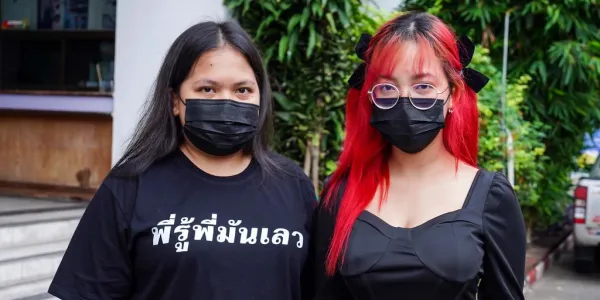
<p>An open letter from University of Wisconsin-Madison Professor Tyrell Haberkorn, and Emeritus Professor Thongchai Winichakul to the Southern Criminal Court, reminding the need to uphold the presumption of innocence and freedom of expression, regarding the detention of two monarchy reform activists who are currently going on a hunger strike.</p>
By Prof Dr Thongchai Winichakul, Prof Dr Tyrell Haberkorn |
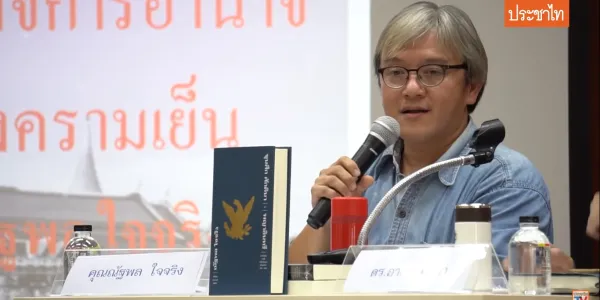
<p>Hundreds of scholars from universities across North America, Europe and Asia are sending letters of appeal to high-level administrators at Chulalongkorn University (CU) asking them to defend academic freedom and stop the attack on Dr Nattapoll Chaiching.</p>

By Surat Sakunkhu |
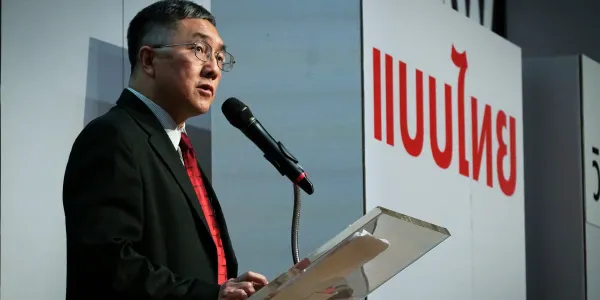
<p>Silences, Histories, and the Future: On Thongchai Winichakul’s Moments of Silence: The Unforgetting of the October 6, 1976, Massacre in Bangkok</p>
By Puangthong Pawakapan |
By Metta Wongwat |
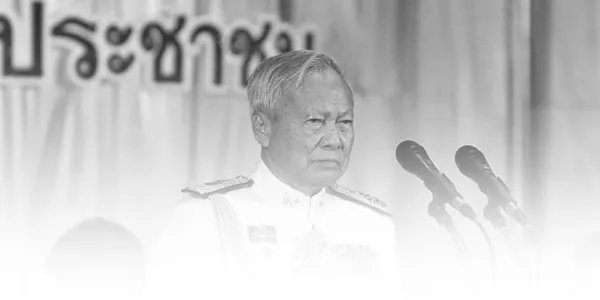
<p dir="ltr">In what follows below, I offer a concise picture of the dynamics and significance of Article 112 over the preceding decade. Some of the sources cannot be fully cited as it may harm those who provided information or defendants in ongoing cases.</p>
<p></p>
By Thongchai Winichakul |
<p>Seminal historian Thongchai Winichakul argues that Thailand’s many constitutions have progressively torn power from the people to be placed back in the hands of the King — a process seen most clearly in the latest charter.</p>
<p></p>
By Thongchai Winichakul |
<div>1. The months of May and June mark several key milestones in Thai history. There is June 1932 (the People’s Revolution) and June 1946 (the assassination of King Rama VIII), the two bloody crackdowns in May 1992 and 2010, and the coup in May 2014.</div>
<p></p>