

By Chayanin Tiangpitayagorn |
Attending the Taiwan Art Week 2025, writes Chayanin Tiangpitayagorn, revealed a jarring gap between the performing arts scene in Taiwan and Thailand and raising questions about what would really help create an authentic political nature for art.

By Professor Dr. Kanokwan Manorom |
Over the past three decades, the Pak Mun villagers have protested the Pak Mun Dam. In the past decade, writes Dr Kanokwan Manorom, the movement has become a slow form of civil disobedience—through continued existence, adaptation, and insistence on their way of life under oppressive power structures.

By Don Pathan |
There was a real fear that the insurgency in Thailand’s southernmost border provinces would relive its bloody past where tit-for-tat violence by government forces and rebel combatants turned the conflict into a bloodbath marked by heavy-handed responses and vigilantism. But the second spike of violence came immediately after the shooting death of a very senior member of the National Revolutionary Front of Patani Malay/Barisan Revolusi Nasional (BRN), Abdulroning Lateh, 60, on 18 April.

By Puttanee Kangkun |
The Ministry of Justice's Rights and Liberties Protection Department is working on an anti-SLAPP bill, aiming to address judicial harassment in Thailand. But despite the proposed legal protections, writes human rights defender Puttanee Kangkun, the bill fails to decriminalize most forms of defamation, which means that Thailand will continue to fail to uphold its international legal obligations every time a defamation case arises.

By Kyaw Swar |
On 4 March, Senior General Min Aung Hliang, leader of Myanmar's military junta, met with the Russian President Vladimir Putin during a goodwill visit to Russia. The junta leader not only gifted Putin a book of horoscopes and six elephants but also made a bizarre claim about his past life—that he was a rat king who gave a mushroom to the Buddha.
From Min Aung Hlaing’s bizarre beliefs to Donald Trump’s supernatural mandate, absurd claims are shaping public policies—and putting humanity at risk.

By Ekmongkhon Puridej |
After more than four years when the youth of Thailand mobilised to demand political reforms, the youth movement is now confronting structural barriers that threaten to undermine its momentum. If they are to have any chance of sustaining their efforts and effecting meaningful change, writes Asia Centre researcher Ekmongkhon Puridej, they need a sustained commitment to inclusive, intergenerational collaboration, robust external support and the political will that can empower them to continue their fight for a democratic future.

By Voranai Vanijaka |
Paetongtarn Shinawatra, Thailand’s youngest prime minister, faces immense political risks as she steps into a role shadowed by her family’s turbulent legacy. Voranai Vanijaka writes that, although Paetongtarn lacks the political experience, she has the family name and the challenge for her would be to prove herself worthy as the prime minister, not her father’s puppet.

By Voranai Vanijaka |
Criticised for being undemocratic and overly complicated, Thailand's Senate election concluded with the national-level selection on 26 June. Voranai Vanijaka writes that it failed at completing its purpose, allegedly to prevent vote buying and maintain the Senate's independence from political parties, and that it is a reminder that although Thailand is no longer under a dictatorship, the dictator’s legacy continues to rule.
By Yukti Mukdawijitra |
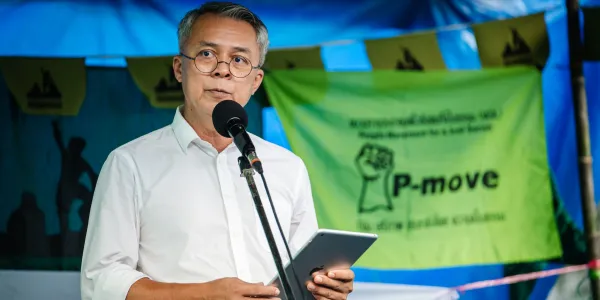
Yukti Mukdawijitra, associate professor of anthropology at Thammasat University, writes about his experience in the arraignment room at the South Bangkok Criminal Court after he was indicted on a royal defamation charge filed against him over a tweet from two years ago.
By Hara Shintaro |
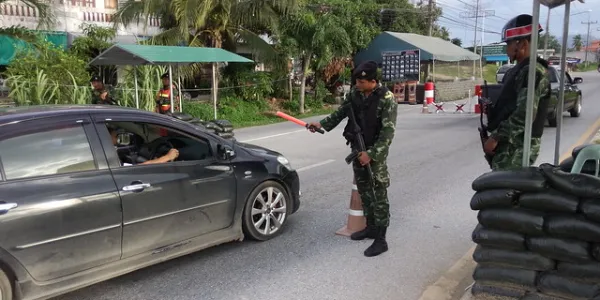
How should the Thai government protect civilians in the country's Deep South? Hara Shintaro writes that dissemination of information about humanitarian principles and International Humanitarian Law could be an effective way to ensure better security for civilians and the Thai authorities should allow activities related to the dissemination of humanitarian principles so that respect for these principles becomes the norm in the conflict area.
By Hara Shintaro |
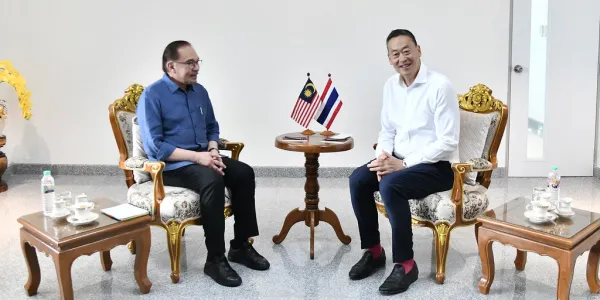
When Thai Prime Minister Srettha Thavisin met his Malaysian counterpart Anwar Ibrahim in November, they did not discuss the conflict in Thailand's Deep South. As the Thai government prepares for a new round of peace talks, Hara Shintaro writes that there is a need for more public participation in the peace process.
By Hara Shintaro |
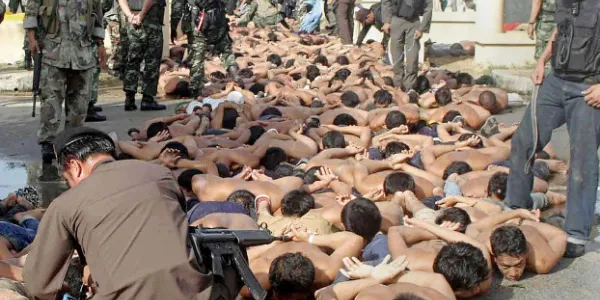
The 20-year statute of limitations for the legal cases related to the Tak Bai incident will be running out in October 2024. The incident remains an obstacle to transitional justice in the Deep South, writes Hara Shintaro, as the culture of impunity in the region made it unlikely that justice will be delivered.