

By Prachatai |
The Civil Court yesterday (24 March) ordered the Akara Resources Public Company Limited, a mining company which has operated mines in Phichit and Phetchabun, to pay damages to local communities affected by the company’s gold mining operation.

By Greenpeace Thailand |
The Thai government’s decision on 10 March 2026 to extend the Thailand–Japan Memorandum of Understanding (MOU) on Liquefied Natural Gas (LNG) cooperation for another three years risks locking Thailand into long-term fossil fuel dependence at a time when the global transition away from fossil fuels is accelerating, Greenpeace Thailand and Greenpeace East Asia warned.

By Prachatai |
On 13 February, the Supreme Administrative Court reaffirmed a temporary injunction halting a proposed coal mine project in Chiang Mai’s Omkoi District after local community members filed a lawsuit alleging that the Environmental Impact Assessment (EIA) for the project was not conducted properly.

By Patrice Victor |
In the Dieng Plateau, a highland region in Java, Indonesia, local communities and a state-owned enterprise clashes over a geothermal energy project.

By Greenpeace Thailand |
Greenpeace Thailand, the Environmental Law Foundation (EnLAW), and civil society networks convened the public forum “Vote for Climate, Write for Justice” today at the Bangkok Art and Culture Centre (BACC). The forum amplified the voices of affected communities and called on political parties to address the climate and environmental crisis through accountable, long-term public policy, rather than limiting environmental discourse to election-period commitments.

By Nuttaphol Meksobhon |
For decades, residents of Nong Phawa village in Rayong has depended on fish and vegatables in the Nong Phawa pond for food and income, but in 2013, an industrial waste recycling factory opened near the community. Its malpractice polluted the pond and damage rubber tree plantations. Meanwhile, villagers began to develop chronic kidney disease. But Nong Phawa is not the only community facing such a suffering. Data gathered by Ecological Alert and Recovery - Thailand (EARTH), a foundation that has long been monitoring environmental crime, found similar problems across the country, where the unchecked rise of waste treatment factories causes harm as they operate without accountability.

By Tyler Roney |
As the House of Representatives approved amendments to the Fisheries Act, including allowing night fishing at more than 12 nautical miles from the shore with fine mesh fishing nets, activists have been pushing back out of the concerns that these changes would undo environmental and labour protections previously enshrined in law.

By ASEAN Parliamentarians for Human Rights (APHR) |
On Monday (23 July), ASEAN Parliamentarians for Human Rights (APHR) held the first hearing of its International Parliamentary Inquiry (IPI) on the adverse impacts of industry activities on the environment, particularly focusing on nickel mining and deforestation in Indonesia.
By Tatiya Trachu |
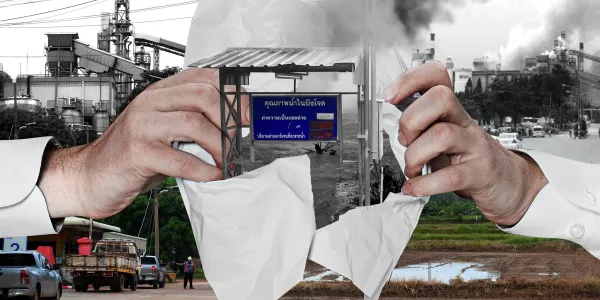
In Khon Kaen's Nam Phong district, a natural marsh covering 600 rai of land which once served as a fishing area and water source for agriculture became a holding pond for factory wastewater discharge. It became so polluted between 1992 - 1998 that fish stocks began dying. Factories in the area have been repeatedly ordered to close, but they later reopened and the marsh remains polluted.
By Prachatai |
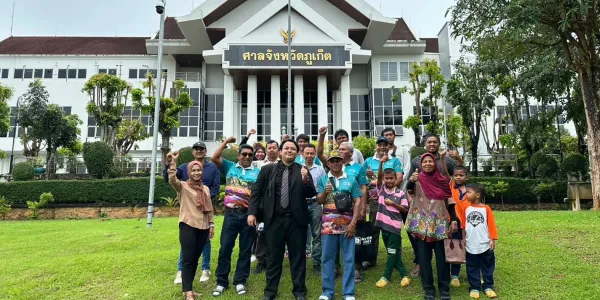
In a decisive affirmation of an earlier ruling, an appellate court dismissed charges of trespassing and property damage brought by a construction investor against environmental activists. The charges arose from a dispute concerning the environmental impact of a ferry terminal construction project.
By Samanachan Buddhajak |
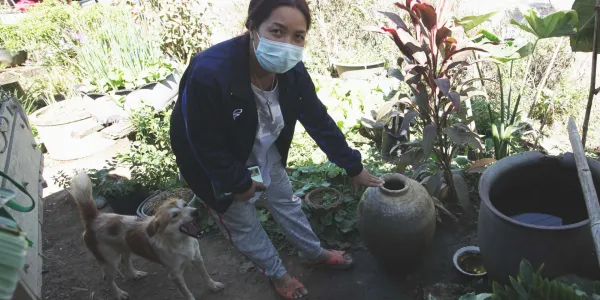
Fermented fish jars, once a sign of prosperity in Thailand's northeast, are now a grim reminder of a culinary tradition threatened by the construction of dams on the Mekong River.
By The Glocal |
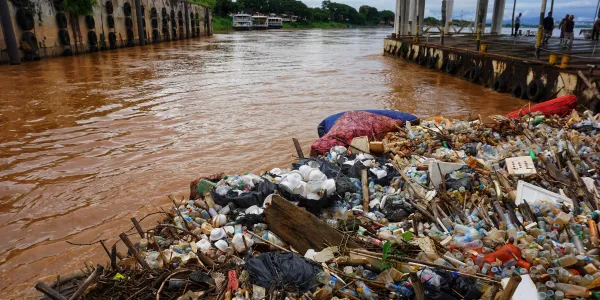
<p>Waste in the Mekong is largely due to poor waste management by riverine communities. Although it includes plastic materials from China, this material may well have been discarded locally. There are also an abundance of discarded containers from Thailand and neighbouring Myanmar. Moreover, microplastic contamination can now be found along the entire length of the river.</p>