

By Wanna Tamthong |
In recent weeks, Thailand’s Chiang Mai Province has been engulfed in toxic air pollution, which has reached dangerous levels. Residents have been forced to live with the smog, as well as unprecedented scorching weather this summer.
While people have been advised to stay indoors, many still have to make ends meet. Stopping work means no money to feed themselves and their families. “I am also afraid of PM2.5 entering my body, but I can’t do anything. I have to keep living like this.” said a 40-year-old food stall owner. Here’s how the bad air is affecting Chiang Mai residents.

By Prachatai |
A group of Chiang Mai residents were seen holding banners demanding a solution to the city’s chronic air pollution problems at several locations, criticizing the centralized government’s ineffectiveness at solving the problem and decentralization so that local communities can handle forest fire.

By Prachatai |
With PM2.5 pollution under increased public scrutiny, sugarcane farmers, often blamed as major polluters, have been under growing pressure to stop burning cane fields. Many growers have complied with new government measures, contributing to a marked reduction in open-field burning. In the process, however, they have had to deal with higher costs, increased operational risks, labour shortages, and limited governmental support.

By Prachatai |
Sugarcane farmers, often targeted as a major source of PM2.5 pollution, have significantly reduced field burning practices to comply with government regulatory measures. Despite the consequences they have suffered - higher costs, labour shortages, increased operational risks, and volatile cane prices - governmental support measures have been underwhelming.

By Prachatai |
Last week, the House of Representatives voted unanimously to pass the Clean Air bill, which would impose regulations to reduce pollution and improve air quality. If approved by the Senate, it would be the first law on air pollution management in Thailand.

By Patrice Victor |
Gasoline and diesel vehicles and factories are conspicuous sources of air pollution in Southeast Asia and elsewhere, but they're not the only ones. In South Sumatra, air pollution worsens during the dry season due to forest fires resulting from slash-and-burn and peatland drainings by companies and farmers looking to clear their land. In response, a group of South Sumatra residents filed a civil lawsuit against three pulpwood plantation companies last August for the chronic smoke haze produced by recurring fires on their concessions.

By Prachatai |
Prime Minister Paetongtarn Shinawatra has ordered public transport in Bangkok to be free for a week from 25-31 January in order to reduce soaring toxic smog.

By Prachatai |
The Supreme Administrative Court has ordered the Prime Minister and the National Environment Board (NEB) to come up with a management plan to address the air pollution problem in the north of Thailand without having to wait for the final verdict in a case that the NEB has appealed.

By Witchakorn Nuanfan |
While Chiang Mai has been facing an air pollution crisis, ranking among the world's most polluted cities between March and April each year, the local authorities and civil society are learning from past challenges and finding a way of addressing the issue.

By Prachatai |
The Supreme Administrative Court has accepted an appeal filed by the National Environment Board (NEB) against a ruling made by the Chiang Mai Administrative Court ordering the NEB to complete an air pollution management plan.
By Sasitorn Aksornwilai |
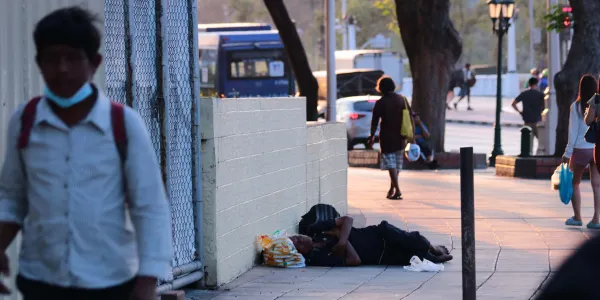
In the vibrant and bustling centre of Bangkok, PM 2.5 readings are soaring to hazardous levels. The city’s most vulnerable residents, the homeless, are left exposed. Living their lives on the streets, their already precarious health is exacerbated by the pollution. Despite promises of action to control pollution, the air quality crisis shows no sign of abating.
By Prachatai |
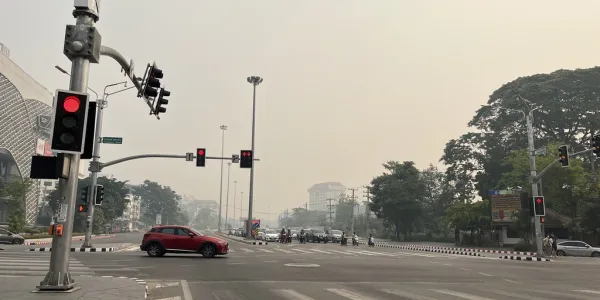
The Chiang Mai Administrative Court ruled on Friday (19 January) that the Prime Minister and the National Environment Board must complete a management plan to address local air pollution issues in 90 days.