
As the Trump administration cracks down on diversity, equity, and inclusion (DEI) programmes at home and abroad, Thailand appears to be moving in the opposite direction. The country has just celebrated the introduction of marriage equality, with even some of its most conservative institutions offering congratulations, though some remain reluctant.
Upon parliament’s approval, His Majesty the King granted royal assent to an amendment to the Civil and Commercial Code, known as the Marriage Equality Law, in September 2024, with the law set to take effect 120 days later. This makes Thailand the first Southeast Asian nation, and the second in Asia after Taiwan, to legalize marriage registration regardless of gender.

Pol Sen Sgt Maj Pisit Sirihiranchai (right) married his boyfriend, Chanathip Sirihiranchai, at the Marriage Equality Day event at Siam Paragon on 23 January. (Photo by Anna Lawattanatrakul)
On 23 January, the first day of implementation, a total of 2,792 couples registered, 1,832 of whom were same-sex couples, including 616 male-male couples and 1,216 female-female couples, some from more conservative backgrounds. Unlike in the US, where civil servants have refused to register marriages, Thai officials in 878 districts followed the new law without any reports of dissent. The Department of Provincial Administration said it was 'happy to be the registrar for all kinds of love.”
In a rare gesture, King Vajiralongkorn sent a bouquet to congratulate a royal guard on his marriage. A 2 February report by Royal World Thailand featured a picture of Kumpol Wongnaree of the Royal Guard Regiment, the King’s Own Bodyguard, in uniform, who married his boyfriend, Nutthabhum Taenseesang.
The Internal Security Operation Command’s website provided coverage of the issue as usual. The 27th Military Circle’s X (Twitter) page shared Paetongtarn Shinawatra’s statement that “the marriage equality law is a starting point for Thai society's awareness of respecting diversity in gender identity, sexuality, ethnicity and religion, where everyone has equal rights and dignity”
Even Sondhi Limthongkul, a well-known conservative figure, took the opportunity to express support for same-sex marriage on his programme. After criticizing Pheu Thai for over-promoting LGBT rights to the point of granting privileges, he turned to People's Party politicians, accusing them of being followers of the west and challenging them to do more to uphold their pro-LGBT stance against Trump’s policies.
“I myself have many siblings, friends, and subordinates who are transgender, gay, lesbian, and queer, but I’ve been open about this for a long time. The Manager newspaper has taken on LGBTQ journalists for a long time and has never discriminated, unlike some news organizations that won’t even accept them as interns.”
“The People's Party, the 'three-finger' kids, and Pita should go to submit a letter of protest to the US Embassy, saying that Trump's policies are a violation of civil rights, limiting rights and freedoms, and regressive. Do you have the courage to do that? Answer me. If you don't dare, it’s a fact that you’re just lackeys of politicians and Western capitalism.”
At the Marriage Equality Day event on the 5th floor of Paragon Hall, Siam Paragon, Bangkok, Pol Sen Sgt Maj Pisit Sirihiranchai and Chanathip Sirihiranchai, a private company employee, registered their marriage on the first day the law took effect, after six years together. They had informed their superiors in advance and received well wishes. However, not all police officers are pleased with the development.
“Equality is equality; I have no issue with that, but don’t take the police uniform there,” said Pol Lt Gen Rawat Klinkesorn, former Commissioner of the Narcotics Suppression Bureau, who called for their superiors to establish a disciplinary committee to address their minor misconduct, according to a report by Manager Online.
“I felt disgusted when I saw them on a social media post kissing cheeks. I called to reprimand them, telling them not to do that. It’s bad. It’s inappropriate. I support marriage equality. I’m not criticizing others, just that young police officer. Everything was going to be good and beautiful. They wore their police uniform. If they hadn’t, everything would have been very delightful and smooth.”
Long road ahead
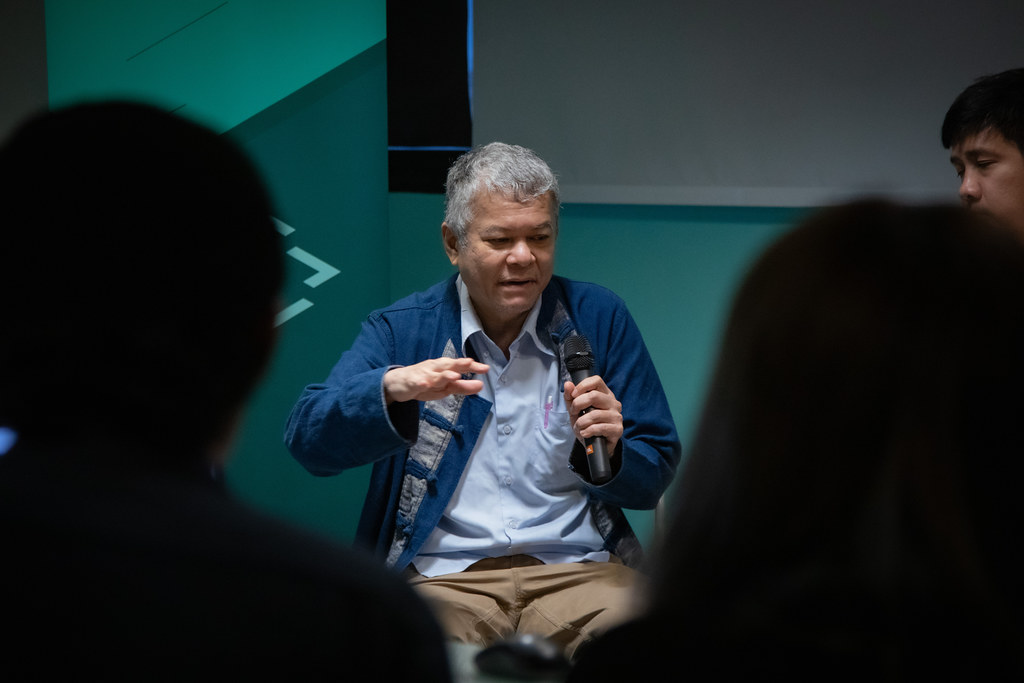
Jaded Chouwilai (Photo from The Fort)
According to BBC Thai, Thailand has historically been accepting of LGBT people due to its multicultural society and minimal influence from colonialism. LGBT individuals have long been part of theatrical performances and Lanna rituals. It wasn’t until the 1940s, under Field Marshal Plaek Phibunsongkhram’s emphasis on militarism, that anti-LGBT sentiment began to take hold. However, Thai society has become more accepting since then.
Jaded Chouwilai, the Director and founder of the Women and Men Progressive Movement Foundation in Thailand, believes that the presence of LGBT couples in Thai society has normalized the issue over time. Additionally, the LGBT movement within the 2020 pro-democracy protests has played a crucial role in the eventual passage of the marriage equality law.
Although progress could have been thwarted by conservatives, they did not perceive marriage equality— which, in Jaded’s view, primarily concerns the middle class— as a significant threat to their interests or core beliefs. As a result, conservative political parties joined other political factions in backing the issue, making the success possible.
Unlike some Islamic countries, where same-sex relationships can result in harsh punishments or death penalties, “we still seem to be a society that remains flexible, which allows, when fighting for LGBT [rights], the right, the centre, and the left to still have common ground on certain issues,” said Jaded.
"The LGBT issue doesn’t solve the structure much. So if it is something like amending the constitution, you’d have to address many issues which conservatives might not be able to accept, such as causing problems to the military’s power or reducing the bureaucracy."
While marriage equality marks a positive development for Thailand, Jaded anticipates a challenging road ahead for the LGBT movement. For conservative institutions like the police and military, the next step means allowing LGBT officers to express their identities in the workplace and recognizing their potential for career advancement.
“Can you allow them [police officers] to dress according to their gender? This is the first step. It must be fought decisively. Whether it's the police or the military, you have to accept it. This issue must be fought no matter what. This, I see it as a symbol, as in universities which have now already accepted it.”
Rather than adhering to traditional notions of masculinity, the security forces should foster inclusion to improve the service and promote merit-based competition. Arguably, a gender quota could be introduced in the initial phase to provide opportunities and phased out once society has achieved widespread acceptance.
"No matter what gender, if there are problems regarding roles and duties at work, they should all be addressed. It's not just women or LGBTQ+ individuals who may tarnish the image. The reputation of males in the police force is already bad. So, having gender diversity might help the police to gain more acceptance.
"If there are many LGBT or women in police circles, and they have the quality of serving the people and they have diversity, those who are women, those who are LGBT will want to use these services. You should actually support this, don’t you think? It will bring the police closer to the public, rather than having only male officers who hold a lot of power. And then people are scared. Sometimes, they also show off their power over the public.
“I believe that everyone may have an LGBT person or a woman as the National Police Commissioner-General or the Army Commander-in-Chief in the future. It’s possible, right? Why? Because whatever your gender, you can manage and take care of the people, or keep the public safe from the problem of crime. That has nothing to do with gender. The question of responsibility is a question of ability and potential, which aren’t limited by gender.”
Beyond same-sex marriage

Couples who registered their marriage at the 23 January Marriage Equality Day event taking a group photo. (Photo by Anna Lawattanatrakul)
“The next step for LGBT is probably not just about marriage equality, I’d like to suggest,” said Jaded.
With or without marriage, LGBT individuals and families still face a wide range of challenges from recognition to poverty and violence.
“You must not forget that LGBT is not just made up of middle class people. LGBT includes the poor, ethnic groups, workers, service employees, and many other different groups. So LGBT must be a part of social movements, moving forward together with social movements, whether it is about social welfare, whether it is about sex worker rights, or other forms of inequality.
“Currently, at the Foundation, we have received a case where a same-sex male couple injured each other. You’ve got to protect them, right? So some LGBT individuals have characteristics of patriarchy and authoritarianism, damaging the couple’s life. We go out and campaign that doing this is unacceptable.”
Then there are issues of stereotypes, or perhaps a more pervasive form of frustration. Jaded suggests that we view it as a normal discussion, where we apply our reason to challenge misunderstandings.
“Having marriage equality doesn't mean that there are limitations that they can’t have children. They can have children, can’t they? They can adopt children, can’t they? We see there are many orphans. There are many couples wanting to have children who they can raise and carry on the family. I think society must be more open-minded and understand this issue better.
“We can't dismiss or say that this is too much, because we must not forget that LGBT people have been very oppressed and pressured. So what they are expressing is the expression of their freedom. They want to say they have an identity and what their own gender is like. It's natural that when they get married, they will talk about it and show us what their married life is.”

Prachatai English is an independent, non-profit news outlet committed to covering underreported issues in Thailand, especially about democratization and human rights, despite pressure from the authorities. Your support will ensure that we stay a professional media source and be able to meet the challenges and deliver in-depth reporting.
• Simple steps to support Prachatai English
1. Bank donation via the "Foundation for Community Educational Media (FCEM)", Krungthai Bank, account number 091-010-4328, Swift Code: KRTHTHBK
2. Or, Transfer money via Paypal, to e-mail address: [email protected], please leave a comment on the transaction as “For Prachatai English”