

By Raviwan Rakthinkamnerd |
This report examines the Thai military’s operations on the digital battlefield during the two rounds of heavy fighting through web-scraped data collected from social media communications and hashtag usage. The analysis covers 6,404 posts published between July 12, 2025 and January 2026 by the official Facebook pages of the Royal Thai Army, the Royal Thai Navy, and the Royal Thai Armed Forces Headquarters—the three military institutions that were most active during the clashes.—as well as a number of unofficial pages.

By Prachatai |
Since taking office, Thailand’s Prime Minister Anutin Charnvirakul has adopted a hardline stance against Cambodia, culminating in the move to suspend the two-week old peace agreement over the latest landmine casualties. What is behind this move? And most importantly, how much influence does a powerful domestic driver like the military have in shaping the government’s decision?

By Supalak Ganjanakhundee |
When ASEAN, led by Malaysia and pressured by Cambodia, pushed to finalize the Terms of Reference (TOR) for establishing a formal ASEAN Observer Team (AOT) to monitor the fragile ceasefire along the Thai-Cambodian border, the government in Bangkok responded with hesitation. Senior officials and military leaders spoke in unison that the Interim Observer Team (IOT), comprising ASEAN military attachés already stationed in Bangkok, was deemed sufficient. No urgent need existed to send real observers from ASEAN capitals.
This reluctance illustrates a deeper sovereignty paradox in Thai foreign policy. While Thailand embraces global norms in principle, it consistently resists international participation in matters it regards as domestic.

By Prachatai |
After a ceasefire was imposed on the armed conflict between Thailand and Cambodia, the Thai government invited the international media and foreign military attaches to inspect the border areas affected by clashes.

By Prachatai |
While Thailand and Cambodia accused each other of violating the ceasefire, the Thai military announced that it had taken control of 11 locations along the border. What does this mean for peace?

By Prachatai |
Even though there have not been further clashes since the 28 May clash at Chong Bok, the border dispute between Thailand and Cambodia appears to be escalating. Amid growing uncertainty, the Pheu Thai government faces public outcry, fuelled by surging nationalism, talk of legal efforts to replace the Prime Minister, and even calls for a junta, while civil society continues to campaign for peace. Meanwhile, the Royal Thai Army arbitrarily announced its readiness to use force.
Supalak Ganjanakhundee, a former news editor, a researcher and an advisor to the House of Representatives' Committee on the Armed Forces, said the Thai military said the Thai military has taken on many responsibilities that should fall under the civilian government.

By Kittiya On-in |
By Yiamyut Sutthichaya |
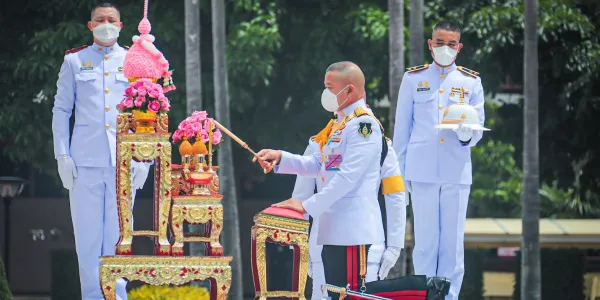
<p>Academic Supalak Ganjanakhundee explains that in the recent 2022 military shake-up, the ‘red rim’ soldiers who are symbolically close to the king have taken over many key positions, reflecting a core problem at the root of the Thai democratic transition that has been plagued by military coups.</p>
By Political editorial team |
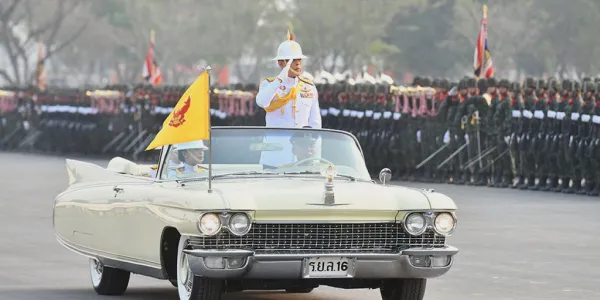
<p>The Thai monarchy’s influence and role in politics have for decades been debated in academic circles and on the street. Under the current reign, the focus of analysis has shifted from the old network to a new one that is gradually becoming clearer - the military.</p>
By Yiamyut Sutthichaya |
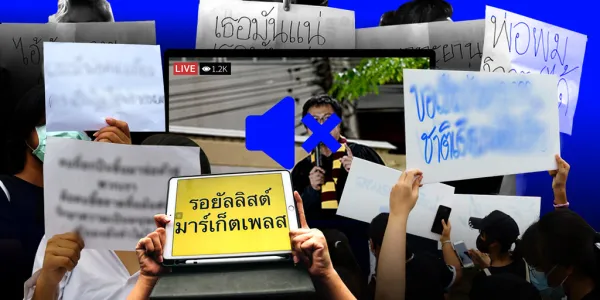
<p>Never before have people's messages about the monarchy, be they satirical or direct, substantial demands for monarchy reform, appeared widely in protests countrywide. But these messages do not make it into the mainstream media due to legal and moral fears.</p>
By Prachatai |
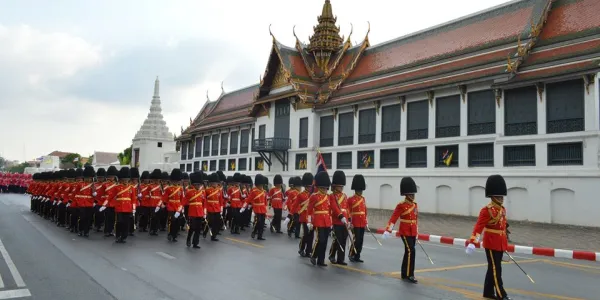
<p>Thai Security Plan admits new generation’s bond to the monarchy has weakened. </p>
By Supalak Ganjanakhundee |
<div>Basically, ordinary people might love to have the right to choose their own representatives to sit in the top jobs in the country. Therefore, elections matter. It is strange to see a certain group of people in Thailand has come out to show their resolve against elections, on the ground that the poll might not bring ‘good’ people into governance. </div>
<div> </div>
<div>While an election would not bring good people or even democracy to the politics, authoritarians in Southeast Asia indeed need elections to justify their governance.
</div>