
By Wanna Tamthong |
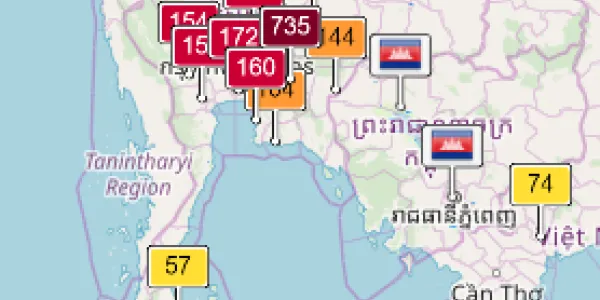
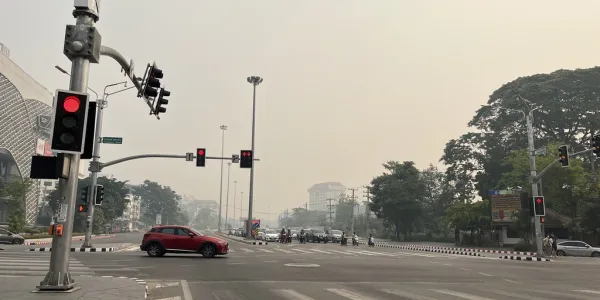
In recent weeks, Thailand’s Chiang Mai Province has been engulfed in toxic air pollution, which has reached dangerous levels. Residents have been forced to live with the smog, as well as unprecedented scorching weather this summer.
While people have been advised to stay indoors, many still have to make ends meet. Stopping work means no money to feed themselves and their families. “I am also afraid of PM2.5 entering my body, but I can’t do anything. I have to keep living like this.” said a 40-year-old food stall owner. Here’s how the bad air is affecting Chiang Mai residents.

By Prachatai |
Last week, the House of Representatives voted unanimously to pass the Clean Air bill, which would impose regulations to reduce pollution and improve air quality. If approved by the Senate, it would be the first law on air pollution management in Thailand.

By Prachatai |
The Supreme Administrative Court has ordered the Prime Minister and the National Environment Board (NEB) to come up with a management plan to address the air pollution problem in the north of Thailand without having to wait for the final verdict in a case that the NEB has appealed.

By Witchakorn Nuanfan |
While Chiang Mai has been facing an air pollution crisis, ranking among the world's most polluted cities between March and April each year, the local authorities and civil society are learning from past challenges and finding a way of addressing the issue.
By Prachatai |
The Chiang Mai Administrative Court ruled on Friday (19 January) that the Prime Minister and the National Environment Board must complete a management plan to address local air pollution issues in 90 days.
By Prachatai |
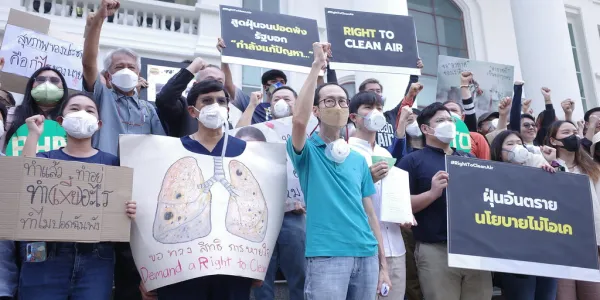
Academics, activists, medical professionals, and residents in Chiang Mai have filed a class action lawsuit against the Prime Minister and other government agencies for lack of action on air pollution, with the provincial capital now ranking among the world’s most polluted cities.
By The Glocal; Nuttakorn Vititanon, Kunnawut Boonreak and Wittayakorn Boonruang |
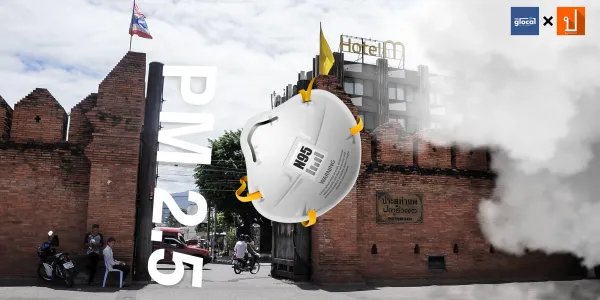
<p>Two myths created by the media caused misunderstandings. One is that Chiang Mai faced the most severe problem, and the second is that this problem is likely to increase in severity every year. Statistics over the past 24 years indicate otherwise.</p>
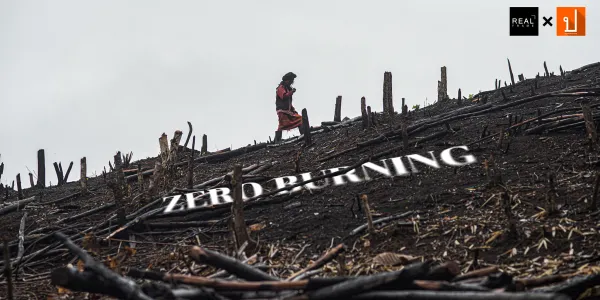
By Yostorn Triyos, Realframe |
<p>In news reports less than 10 years ago, the new problem of PM2.5 dust was added to news items in the Thai media of forest fires and the problem of haze caused by forest fires and crop burning. This has led to a clear concrete policy shift, since it has a direct impact on the lives of the middle class in the country’s large cities, especially major centres like Bangkok and tourist spots like Chiang Mai Province. With an unidentifiable origin, smog, forest fires and PM2.5 have by implication become the same thing.</p>
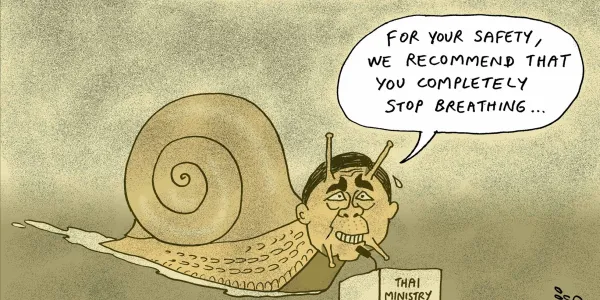
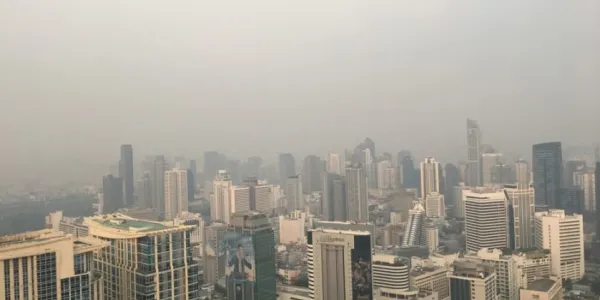
By Prachatai |
<p>Thailand’s <a href="https://prachatai.com/english/node/8325">smog crisis</a> continues in Bangkok and other provinces for a second week, with pollution readings at hazardous levels, while the spokesperson of the Prime Minister’s Office has insisted that the situation has yet to reach a crisis level and asks the public not to panic.</p>
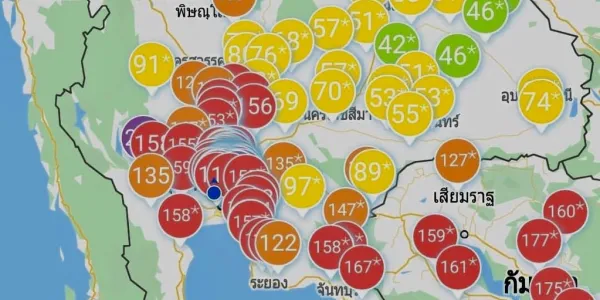
<p>PM2.5 levels in Bangkok and surrounding provinces have reached a hazardous level for the third consecutive day on Friday (10 January), with the air quality measuring between 156 – 163 AQI (Air Quality Index), while the government has yet to issue any concrete long-term plan to tackle the issue.</p>