

By Prachatai |
Last week, local musicians and music venue owners in Chiang Mai announced that they will boycott a music festival organized by the Tourism Authority of Thailand (TAT) for its lack of participation from and support for local people. Meanwhile, a member of a local musicians’ network said the organization of the festival highlights what is wrong with budget allocation by a centralized government.
By Anna Lawattanatrakul |
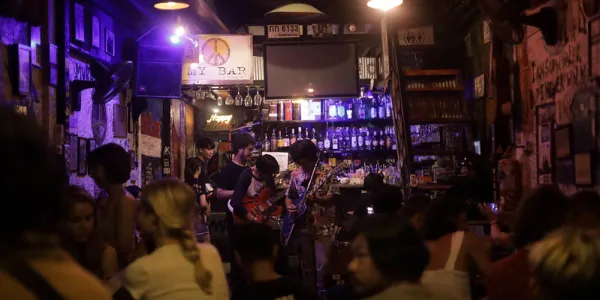
During the Covid-19 pandemic, when performance and entertainment venues closed, Thailand's musicians faced unemployment and lack of income. Many were forced to sell their beloved instruments or resort to finding other jobs to make ends meet, while missing out on assistance from the government for being informal workers. Meanwhile, the pandemic brought to the surface issues faced by workers in the Thai music industry, from precarious employment and unfair working conditions to lack of support for the creative economy.

<p>During the pandemic, Thai musicians and workers in the music industry faced unemployment as bars and entertainment venues were ordered to close. Many had to sell their instruments to keep themselves afloat, or make a living doing whatever else they could, while some left the industry altogether.</p><p>In "Unplugged: Music in Crisis," Thai musicians talk about their lives during and after the pandemic, and the future of creative economy in Thailand.</p>
By Prachatai |
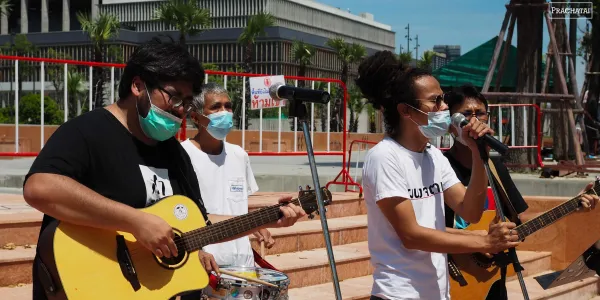
<p>The Thailand Nightland and Entertainment Business Association (NEBA), along with a group of musicians, went to parliament on 1 July to submit a letter inquiring about their demands for assistance for workers in the nightlife and entertainment industry who have been affected by the Covid-19 lockdown, while the Commoner Band performed by the Parliament compound to show support for their colleagues, and to hold a memorial event for a musician who recently committed suicide. </p>

By Pattanun Arunpreechawat and Chatchai Mongkol |
<p>While members of idol girl groups such as BNK48 are seen as products and are expected to be voices for the society, they neither see themselves as objectified nor obligated to advocate for social issues, but they have to adapt to a mixture of Thai and Japanese idol cultures. Idol insiders also explain the business model and its origins.</p>