

By Nay Shinn Khant |
On 14 January 2026, a policy forum hosted by Chiang Mai University (CMU) at Suan Anya in Chiang Mai challenged the traditional "top-down" approach to environmental conservation in Thailand. The event, titled "Transforming Research into Policy: Ethnic Environmental Heritage and Survival from the Climate Crisis," served as a platform for academics, activists, and politicians to demand a seat at the table for the country’s ethnic "forest guardians."

By Prachatai |
2025 has been an eventful year in Thailand: a year of changes political watershed moments, from new laws coming into effect to a border war. Here we look back at the year through the lens of our photographers.

By Anna Lawattanatrakul |
In September 2024, flash floods and landslides devastated the Huai Hin Lad Nai village, an Indigenous Karen community named Thailand's first Indigenous way of life protection zone. The community was subsequently accused of being the cause of the flood. The community is now well on its way to recovery, but debates continue about the role of traditional knowledge in disaster prevention and whether Indigenous communities should be given more autonomy.

By UN Human Rights Regional Office (OHCHR) for South-East Asia |
The UN Human Rights Regional Office (OHCHR) for South-East Asia welcomes Thailand’s enactment of its new law on the protection and promotion of the ethnic groups’ ways of life, marking a significant step toward protecting the rights of ethnic groups in the country.

By Prachatai |
The Thai parliament has voted to pass the Ethnic Way of Life Protection bill, the first law in Thailand to protect Indigenous peoples’ cultural rights and way of life. Meanwhile, the opposition and civil society said work remains to be done to ensure protection for Thailand’s Indigenous peoples.

By Anna Lawattanatrakul |
The Thai parliament approved last week the Ethnic Way of Life bill in its second and third readings, despite opposition from civil society, which withdrew support for the bill following several omissions and changes to core sections, including the use of the term “indigenous” and the exemption of conservation laws in Ethnic Way of Life Protection Areas.

By Prachatai |
The Thai parliament has voted during the second reading of the Ethnic Way of Life bill not to include indigenous peoples in its definition of ethnic groups despite calls for the bill to ensure the protection of indigenous cultures.

By Prachatai |
The Ban Rin Luang indigenous Lisu community from Chiang Mai’s Chiang Dao District has filed a petition with the Permanent Secretary of the Ministry of Natural Resources and Environment calling for an end to prosecution and eviction after park officials destroyed their crops.

By Ratcha Satitsongtham |
The Pwo Karen community of Ban Mae San have practiced their traditional agricultural practices for generations, while also caring for a community forest. Their community predates the government's designation of the area as Tham Pha Thai National Park in 1991. However, government measures are now putting their way of life at risk, while indigenous peoples are blamed as a cause of air pollution. Community leaders now call for legal protection under an indigenous protection law.
By Prachatai |
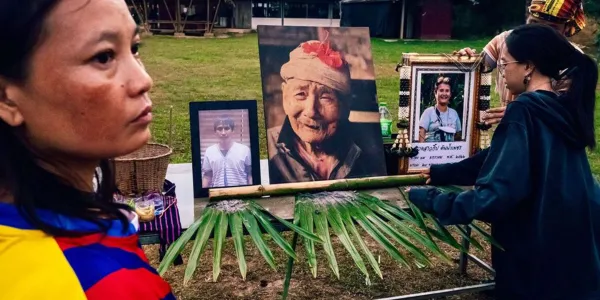
Members of the Bang Kloi community and civil society organizations gathered on 17 April to commemorate the 10th anniversary of the disappearance of indigenous rights activist Porlajee Rakchongcharoen, while the community continues to face land right issues.
By Prachatai |
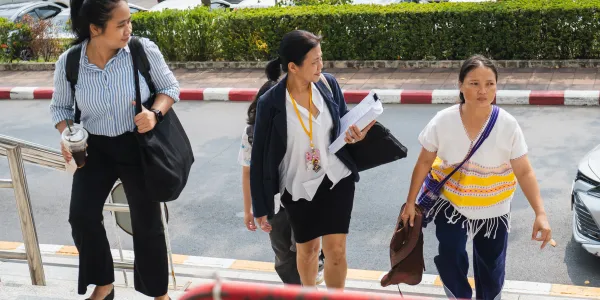
The family of indigenous rights activist Porlajee Rakchongcharoen has filed a lawsuit against the Department of National Parks, Wildlife, and Plant Conservation (DNP) for 26 million baht in damages over park officials’ involvement in Porlajee’s alleged abduction and murder.

By Prachatai |
The Office of the Attorney General has ruled against indicting military officers accused of killing indigenous Lahu activist Chaiyaphum Pasae.