

By Prachatai |
Thai voters now have less than a week to go before they go to the polls to vote in a historic constitutional reform referendum which asks whether they want a new constitution. For political parties and civil society groups campaigning for a vote in favour of a new constitution, the stakes are high. If the majority does not vote in favour, there is no way of amending the Constitution. Meanwhile, conservatives are campaigning against a new constitution, and while people have the freedom to believe what they believe, many reasons cited by these groups can be considered misinformation, even verging on fearmongering and fake news.
By Prachatai |
<p>Prachatai’s Facebook page has been found on the Ministry of Digital Economy and Society (MDES)’s list of sites that spread fake news, which also includes Facebook pages for activists and activist groups, as well as other online news sites.</p>
By Prachatai |
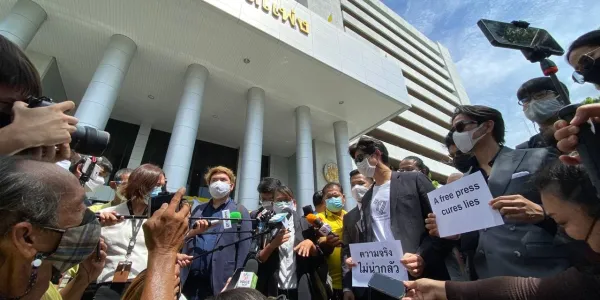
<p>media agencies and a civil society group filed a complaint against Gen Prayut Chan-o-cha as the Prime Minister and head of the Centre for COVID-19 Situation Administration (CCSA) over the 29th order under the Emergency Decree banning distribution of information causing public fear or misinformation.</p>

By Prachatai |
<p>A recent governmental decree banning the distribution of “fake news” has left local media associations and a legal watchdog concerned that the effort will limit public internet access.</p>
By Prachatai |
<p>Cofact, a local fact-checking organization, published its first annual report in an effort to promote awareness of how misinformation circulates in Thailand. Recent examples include claims that cancer and the Covid-19 virus can be cured by drinking lemonade and soda water.</p>